
Key Takeaways
- A refraction eye exam determines whether you need glasses or contacts.
- It can detect nearsightedness, farsightedness, astigmatism, and age-related vision changes.
- Refraction and a comprehensive eye exam are two separate parts of the same visit.
- Refraction is often billed separately from medical eye care and may not be covered by medical insurance.
- Many adults benefit from a refraction once a year, or sooner if vision changes appear.
A Refraction Helps Determine Your Prescription
You probably remember the moment: you’re sitting behind a big piece of equipment and your eye doctor asks, “Which is clearer, one or two?” This process is known as a refraction eye exam.
A refraction eye exam is the part of your eye exam where your eye doctor measures how your eyes focus light. The results determine your prescription for glasses or contacts. At South End Eye, a refraction eye exam is one part of a thorough visit that looks at both your prescription and the health of your eyes.
The Part of Your Eye Exam That Gets You Your Prescription
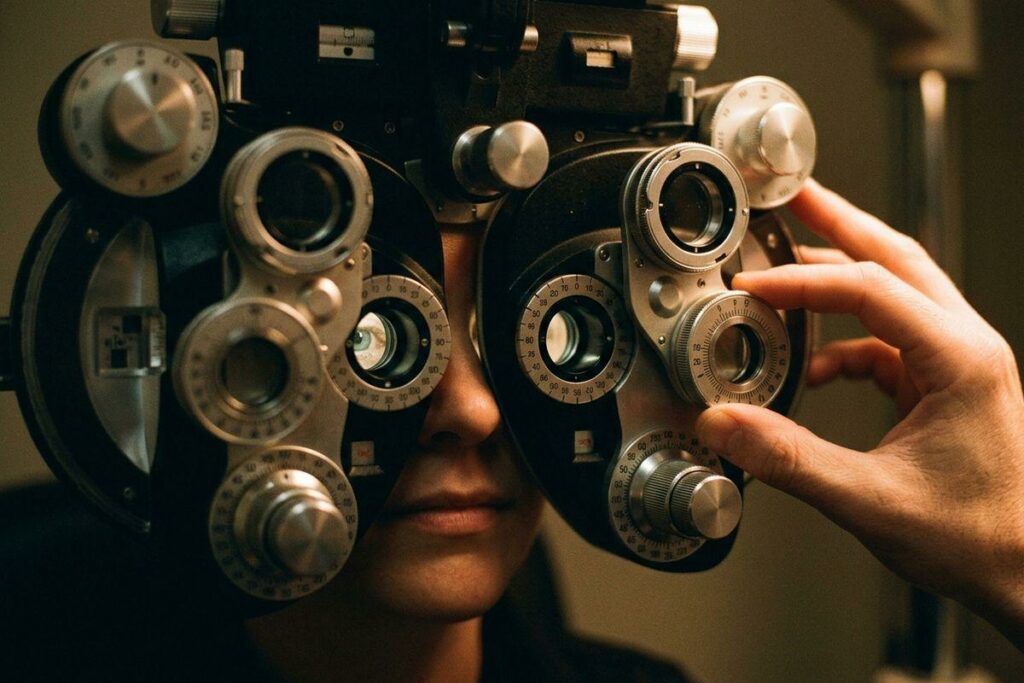
During a refraction, your eye doctor uses a tool called a phoropter. This is the device you look through while comparing lens options. The goal is to find the lens combination that gives you the sharpest, most comfortable vision.
What a Refraction Eye Exam Can Detect
Common Refractive Errors
A refraction eye exam helps identify common causes of blurry vision. These include refractive errors, such as:
- Nearsightedness, which is when distant objects look blurry
- Farsightedness, which is when close-up objects look blurry
- Astigmatism, which causes blurry or distorted vision at multiple distances
Presbyopia & Age-Related Vision Changes
Around your mid-40s, you might notice that it’s harder to read a menu or focus on close-up objects. This is called presbyopia, and it happens because the lens inside your eye loses flexibility as you age. A refraction eye exam can identify presbyopia.
Why Refraction Is More Than Just a Prescription Check
It’s easy to think of refraction as a simple way to update your prescription. However, it does more than that.
Over time, tracking how your prescription changes can give your eye doctor in Boston a clearer picture of your overall eye health. Sudden shifts in your prescription can sometimes signal potential issues, and regular refraction eye exams can help your optometrist stay on top of those changes.

Comprehensive Eye Exam vs. Refraction: What’s the Difference?
Two Separate Parts of One Visit
A comprehensive eye exam and a refraction happen during the same appointment, but they cover different ground. The comprehensive eye exam checks the overall health of your eyes, while a refraction focuses specifically on your prescription. Both matter, and both work together to give your eye doctor the full picture.
Why Refraction Is Often Billed Separately
If you’ve ever been surprised by a separate line item on your bill for refraction, here’s why that happens. Medical insurance typically covers services related to eye disease diagnosis and treatment. Refraction is considered a vision service, not a medical one, so it often falls outside that coverage.
On the other hand, vision plans often do cover refraction as part of a routine visit, while HSA or FSA funds can frequently be used to cover refraction costs.
How Often You Should Have a Refraction Test
For most adults, once a year is a reasonable general guideline. Vision can shift gradually, and annual visits to an eye doctor in Boston can help catch those changes before they start affecting your day-to-day life.
That said, don’t wait for your next scheduled appointment if something feels off. If you notice your vision getting blurry, if you’re getting more headaches, or if reading feels harder than it used to, these are all signs worth bringing up sooner rather than later.
At South End Eye, our team is here to make sure that your prescription is current and accurate. If it’s been a while since your last refraction, now is a great time to schedule an appointment.